
-

 Sold out
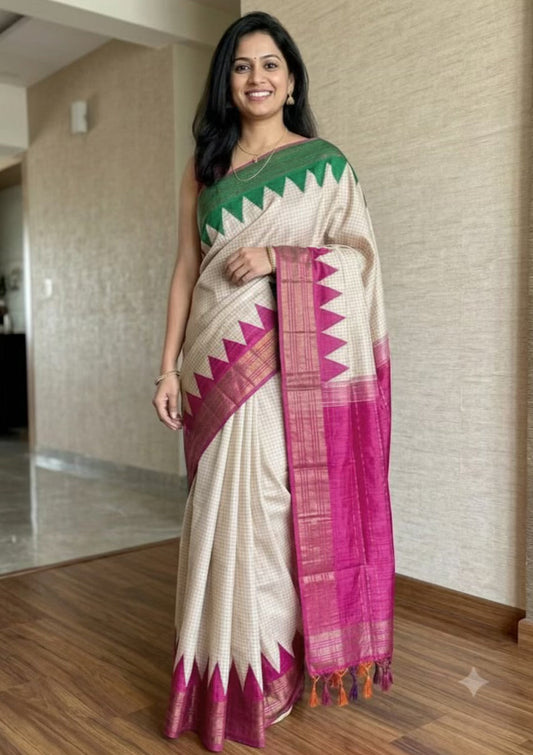
Tussar Silk Check HalfWhite Saree
Regular price Rs. 6,450.00Regular priceUnit price per -
 Sold out
Tussar Silk YellowB Saree
Regular price Rs. 4,800.00Regular priceUnit price per -
 Sold out
Tussar Silk Pink Saree
Regular price Rs. 4,800.00Regular priceUnit price per -

 Sold out
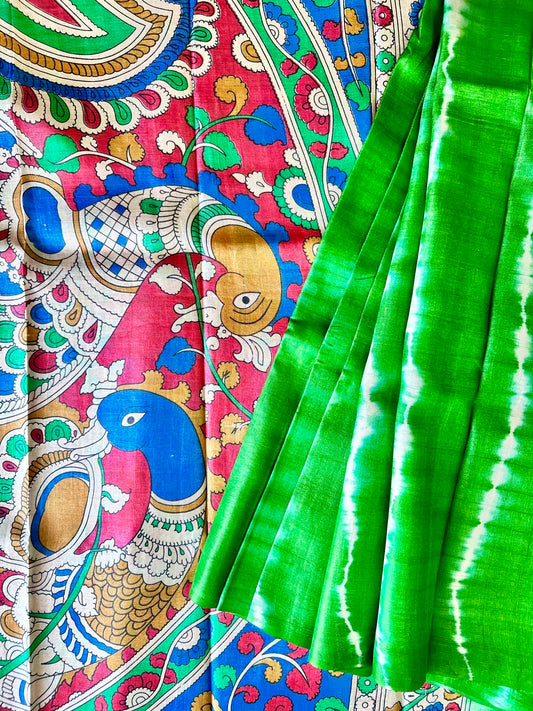
Tussar Shibori Green Saree
Regular price Rs. 5,500.00Regular priceUnit price per -

 Sold out
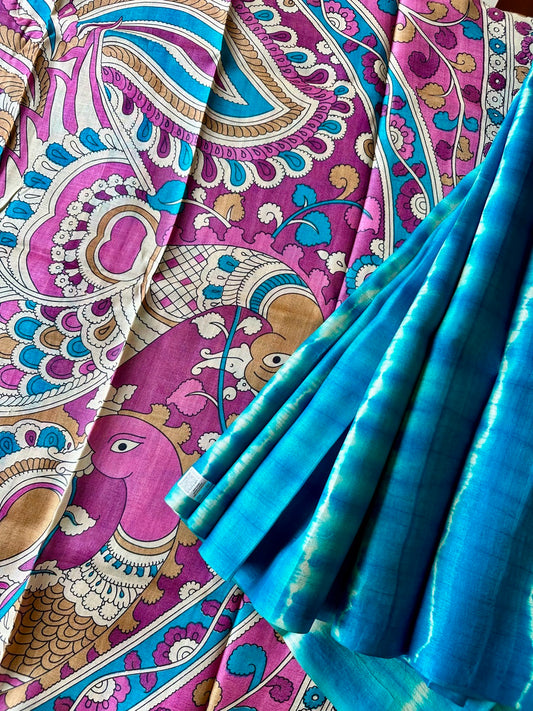
Tussar Shibori Blue Saree
Regular price Rs. 5,500.00Regular priceUnit price per -

 Sold out
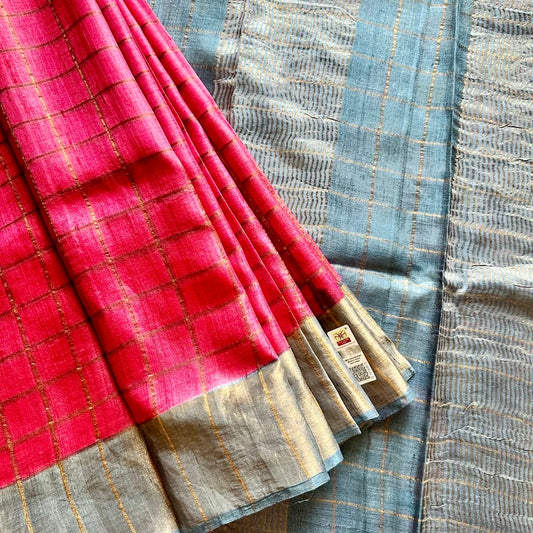
Tussar Pink Saree
Regular price Rs. 5,700.00Regular priceUnit price per -

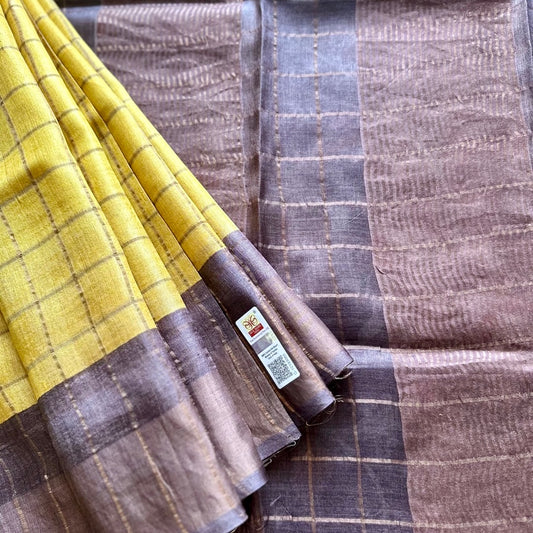 Sold out
Tussar Yellow Saree
Regular price Rs. 5,700.00Regular priceUnit price per -

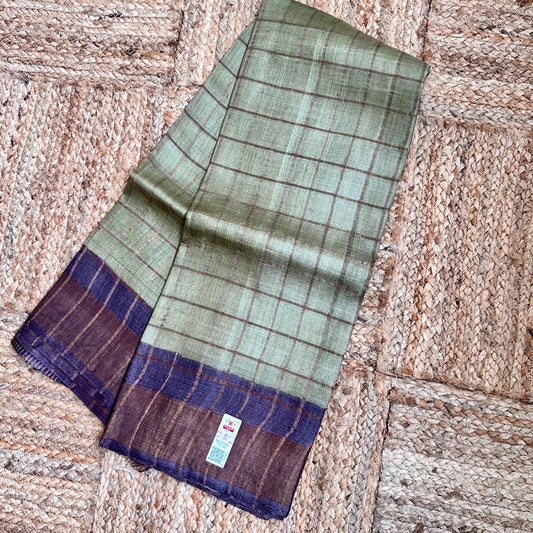 Sold out
Tussar YGreen Saree
Regular price Rs. 5,700.00Regular priceUnit price per


FAQ about Tussar Silk Saree
The most reliable way to identify authentic Tussar silk is the "Burn Test." Extract a single thread from the inner fringe and light it; pure silk smells like burnt hair and leaves a black, crumbly ash. In contrast, synthetic "art silk" melts into a hard plastic bead and smells like chemicals. Additionally, look for Silk Mark Certification, which is the gold standard for purity in India.
In the world of handloom, these are called "natural slubs" in silk, and they are actually a sign of quality, not a defect. Unlike machine-made fabrics that are perfectly uniform, a hand-knotted Kosa silk saree carries the "fingerprints" of the weaver. These irregularities prove the saree was woven on a traditional loom, giving it the unique, organic character that defines authentic wild silk.
Absolutely. Tussar is known as the "cool silk for summer." Because it is a wild silk with shorter fibers and a more porous weave than Kanjivaram or Banarasi, it allows for superior air circulation. It is widely considered the best breathable silk saree for humid climates, keeping you poised and comfortable even during long morning ceremonies.
To preserve the natural luster, we recommend professional dry cleaning only. For storage, always wrap Tussar silk in muslin cloth bags rather than plastic, as the fibers need to breathe. To prevent the fabric from becoming brittle or fraying at the creases, take it out every few months to air in a shaded area and change the fold lines.
While both belong to the Tussar family, Bhagalpuri Tussar is made from the main silk filaments, resulting in a smoother finish. Gicha silk is crafted from the un-reeled or "leftover" yarn of the cocoon, which gives it a much more textured, rustic, and matte appearance. Both are pure handloom silks, but Gicha is preferred by those who love a highly textured, earthy look.
